Radio Veronica Studios : 1970

Radio Veronica was probably the longest running of all European offshore radio stations, broadcasting primarily to listeners in Holland from 21st April 1960 until 31st August 1974 when Dutch government legislation came into force.

Broadcasting on 192 meters (later 538 metres) Medium Wave from the m/v Borkum Riff, later m/v Nordeney, Radio Veronica in its heyday became the most popular of all radio stations in the Netherlands.

During its 14 year existence, Radio Veronica encountered several other pirate competitors including Radio/TV Noordzee broadcasting from the REM island, as well as ship-borne Radio Dolfijn and Radio 227 (ex Radio England & Britain Radio), Radio Nordsee International (RNI), Radio Caroline, Radio Atlantis and Radio Mi Amigo.

In contrast to most other European offshore stations in the 1960s, which originated their programmes from ship-borne studios, nearly all Radio Veronica’s output was pre-recorded on land at studios located in Hilversum, Holland.

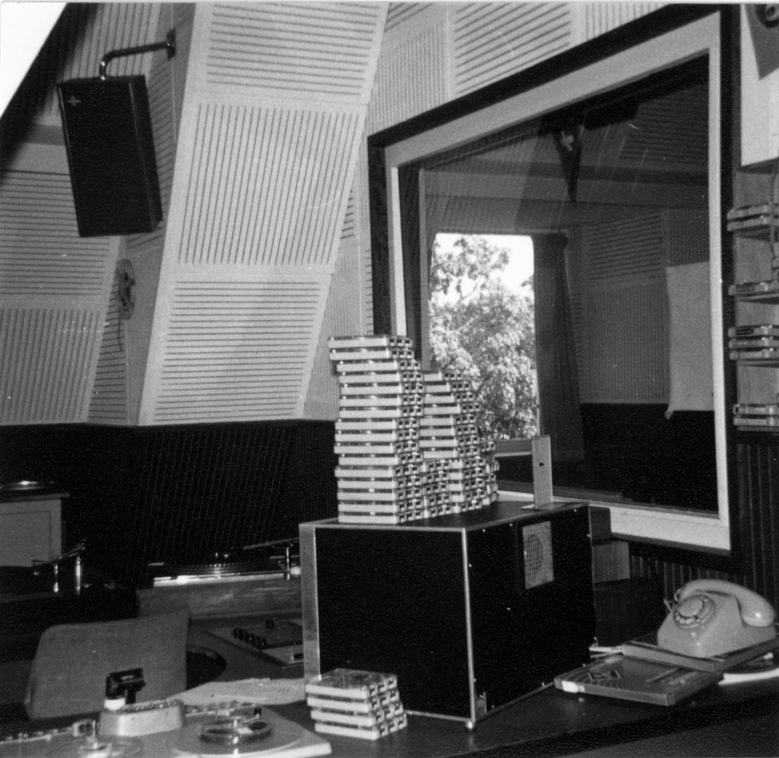
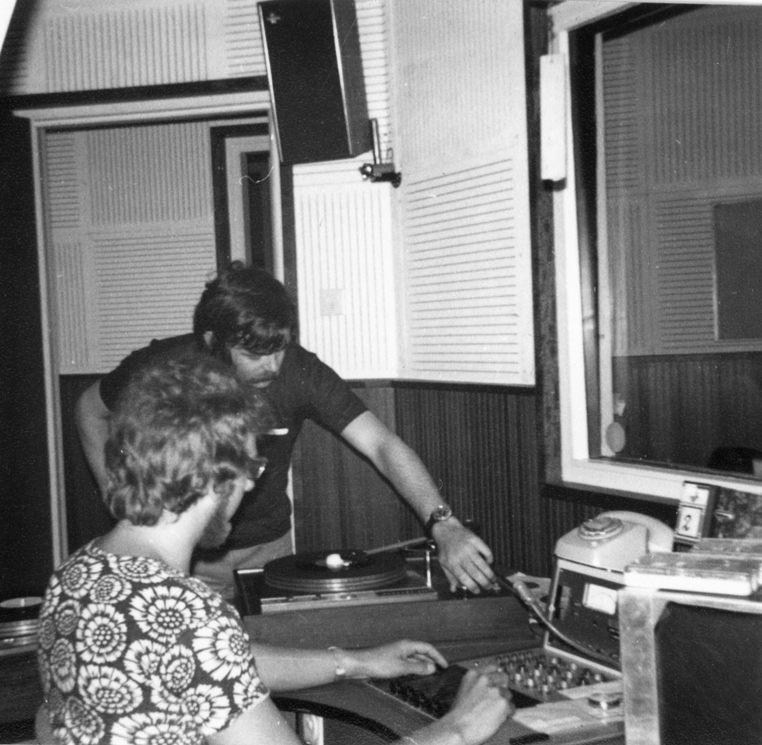
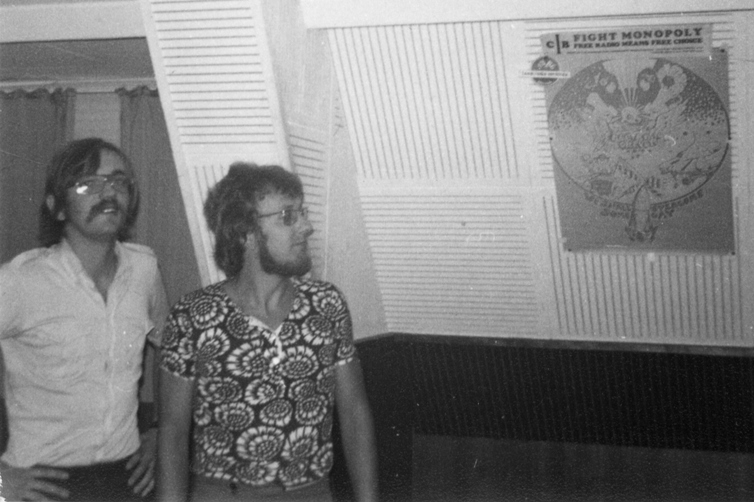
The photos below were made when CIB’s Fred Bunzl visited Veronica’s studios in Hilversum’s Utrechtseweg in July 1970. Fred well remembers his visit: “The thing I remember most was the almost total lack of security. Nobody knew in advance that I was going to visit — I simply walked in the front door and asked the girl at reception if I could take a few photographs. She just smiled and told me to go upstairs where the studios were located. I took a few photos and I remember meeting Lex Harding who happened to be recording one of his programmes at the time. I also made a recording of interviews with some of the technicians and with Lex Harding… The sad part is that very recently, when I tried to transfer the recording to .mp3, the old cassette refused to cooperate and turned to spaghetti – lost for ever 🙁

After closure some ex Veronica staff set up a new organisation (VOO) and were granted a broadcasting license in December 1975.


The picture above of Radio Veronica’s studio building is provided thanks to Jelle Boonstra of JingleWeb.nl. More info about Radio Veronica here and here.


Click here for:
Radio Veronica Trip Souvenir Pictures.
Radio Veronica Recordings.

How I Joined the Campaign for Independent Broadcasting

Hi, my name is Fred Bunzl, former Hon. General Secretary of the Campaign For Independent Broadcasting (CIB), and as I sit here at my desk in November 2013, I
shudder to think that it’s now nearly 45 years since I joined as a member of a group called the “National Commercial Radio Movement” (NCRM) back in January 1969.

I had often listened to the offshore (“pirate”) radio stations that ringed the UK between 1964 and 1967. Living in the south east of England at the time, I think my favourites were probably 259 Radio Caroline South and 266 Radio London, although I may have tuned in to Radio 390‘s soft music from time to time.

Then on 27th July 1966, the Labour government of Harold Wilson introduced the “Marine, Etc., Broadcasting (Offences) Bill to the House of Commons and on 14th August 1967 the Bill had become law.

Of course, for many years, it had already been illegal to listen to such unlicensed broadcasts but clearly the government felt uncomfortable with the prospect of prosecuting millions of music listeners who preferred the offshore pirate programmes to the BBC’s three alternatives which, at the time, were the “Home Service“, the “Light Programme” and the “Third Programme“.

The new 1967 law made it illegal for UK residents not only to have anything to do with the offshore stations, it also became illegal to write or say anything which might be construed as some sort of advertisement for an offshore station. This not only stopped any UK newspaper or journal from publishing any offshore radio program listings, it also stopped publication of books which did little more than record the history of those stations.

One example is “Pop Went The Pirates” by Keith Skues to whom I had written in 1968 asking where I could buy a copy. True to form, Keith Skues promptly replied (his letter today resides as a souvenir inside the opening cover of my copy of Keith’s book) stating that “…alas, it never got published. Perhaps it will eventually come out when there is either a change of Government, or at the introduction of commercial radio…“.

If Keith Skues’ book had been published in 1968 its author, publisher and printer might well have been prosecuted. But with the passing of time, the same book’s contents now appear to be regarded as “history” rather than “advertising”…

As we know, on 14th August 1967, when the Government outlawed the offshore pirate radio stations, the two Radio Caroline ships, anchored off Frinton, Essex and the Isle of Man, defiantly continued broadcasting. But by March 1968 Caroline’s money had run out and both radio stations were silenced by the Dutch tender company which had regularly supplied them because of unpaid bills.

So why did I join NCRM? The catalyst for me was undoubtedly the silencing of Radio Caroline in March 1968. It represented the end of UK independent radio and I felt the need to take action to remedy the situation, rather than sit back in my comfortable chair and wring my hands.

At that time I had a weekly subscription to a journal called “Record Retailer” and I remember that whilst the offshore stations were broadcasting, Record Retailer had regularly published each station’s “Fab 40” or “Top 50” record charts. They had also published some information about NCRM so I requested they send me address details so that I could contact them. This they did and I promptly received a letter and brochure from NCRM’s Hon. Public Relations Officer, Martin Rosen on which I acted to join.

Can’t find what you are looking for?
Generic selectors
Exact matches only
Search in title
Search in content
Post Type Selectors
post